I was watching a random recipe video last week, and I was kind of taken by surprise when the person doing the cooking rather casually mentioned that they never use regular table salt because it has chemicals in it that are bad for you and so they only ever use sea salt.
 Cue facepalm moment. Table salt has been iodized and it usually has an anti-caking agent in it, but neither of those things are harmful and one is in fact quite necessary for your health. When I see something that contradicts something I think I already know, though, I do try to make a point of going and looking it up. So I went googling.
Cue even harder facepalm moment. People actually have conspiracy theories about salt. Salt. Somewhere there’s a monkey in a zoo hiding its face in shame because humans keep saying we’re a related species. We live in an age where all the information in the world is available to us at the click of a mouse or the tap of a button twenty-four hours a day, seven days a week, and still nobody can be arsed to look anything up.
I like doing research, though. So, I did some to get the answer to my question: Which salt is best, and for what?
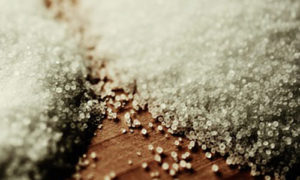 Turns out that no, regular table salt isn’t bad for you because of chemicals – too much salt in general is bad for you, of course, but that’s not what we’re talking about. Anti-caking agents added to salt don’t do anything for you, but they also don’t do anything to you, they’re added for your convenience. Because salt has a tendency to clump when it’s exposed to humidity, the anti-caking agent keeps it flowing out of the shaker in single grains rather than turning into a solid block of salt. This is actually something you can DIY: If you’re in a humid environment and your salt keeps clumping in the shaker, just add some dry grains of rice to the shaker with the salt. The rice will absorb any excess moisture, and your salt will continue to flow freely. This is also the same science reason some people put a piece of bread in the bottom of their cookie jar to keep the cookies from getting hard (note: I personally have always found that particular practice to be incredibly disgusting, but that’s just me).
Table salt is iodized for a really good reason(2-4), that reason being that your body needs the dietary mineral iodine for proper thyroid function and, as it turns out, for proper brain development too. Iodine deficiency is the leading preventable cause of intellectual and developmental disabilities and accounts for over 90% of all cases of goiter worldwide.(2-4) While there is some iodine naturally occurring in the food chain, the majority of the world’s population (no, not just Americans or people in ‘developed’ countries or people who don’t eat enough fish) don’t live in places where they’re going to get enough of it just from their diet.(2) Someone back in the 1920s realized this was a huge problem and suggested adding iodine – which you only need a little bit of in your diet, not a whole lot – to something everyone used just a little bit of every day, which was table salt. This solved the problem in a very cheap and convenient manner, and in some countries it is now mandatory for edible salt to be iodized. Here in the US you can buy non-iodized table salt, also marketed as canning or pickling salt, but it’s only meant for use in processes like pickling or brining.
You can also buy iodized kosher salt. Kosher salt? Think pretzel salt. It’s in much bigger chunks than the very fine, tiny grains of table salt. You’ll see kosher salt specifically mentioned in a lot of recipes, which leads us to our next important piece of information: Salt is salt no matter how fine or chunky it is, but different types of salt ARE used for different things and they are NOT interchangeable without the use of math.(1,3) Chefs like kosher salt because it’s easier for them to gauge the amount they’re putting in by sight and feel when they add a pinch of salt to food – really, that’s it, that’s the only reason. But because most recipes not intended for chefs have the ingredients measured by volume (teaspoons), not weight (grams), using the wrong type of salt can make a huge difference in how the recipe comes out.(1) One teaspoon of table salt is going to be almost twice as salty as one teaspoon of kosher salt, because big chunks take up more space than little chunks (science!). So if you have to substitute table salt when a recipe calls for kosher salt, you’re only going to want to only add about half the original amount of salt called for or else your food is going to end up really salty. Both table and kosher salt are relatively cheap, though, so there’s no reason not to keep them both in your kitchen. My personal rule of thumb is that table salt is for baking and kosher salt is for cooking. And pretzels, of course. Table salt on a pretzel is just unnatural.
But, you’re saying, what about sea salt? Sea salt is natural. It already has minerals in it. The taste is different. It hasn’t been processed. And it’s natural!
Okay, all salt is natural unless it’s the fake salt made for use by people who for medical reasons can’t have real salt. Salt is a naturally-occurring mineral that comes from one of two places: salt mines or seawater. Commercially marketed sea salt is just salt harvested through the evaporation of seawater which may not have been processed very much, and it does not have iodine added. Does it have a slightly different taste than table salt? It can, and it can also be a variety of colors depending on where it came from. Is that going to make a flavor difference in your cooking? Nope. Whatever subtle flavor difference there is in sea salt or most other varieties of fancy salt, the cooking process is going to erase it.(1,3) So what you want to use your sea salt, pink Himalayan salt, or other expensive salts for is what chefs call finishing – seasoning the dish for serving after it’s plated, when the color and flavor variations of the salt or the nice little crunch from biting into a chunk will be able to be appreciated. You can also buy or make flavored salts to use for finishing, such as black lava salt, smoked salt, chili salt or even chocolate salt. I have some chocolate salt and it’s quite nice, but I have actually experimented with it and no, even that sort of flavor won’t come through if you try to cook with it. So save the pricey stuff for sprinkling, use the cheaper stuff for cooking. And make sure at least some of what you’re using is iodized.
I quite enjoyed the result of your research, and did find it amusing. A sibling was having issues with their thyroid and iodine levels, was taking iodine and hated it. Our parents then said, why not go back to table salt. Voila, end of problems…. :).
Thanks! And yes, even that little bit they put in table salt can make a huge difference. From what I saw it seems like a lot of people get told they can get enough iodine in their diet just by eating certain foods, which can be some very bad dietary advice.